RAF-HI: Robot Assisted Feeding in a Hospital Inpatient Setting
Abstract
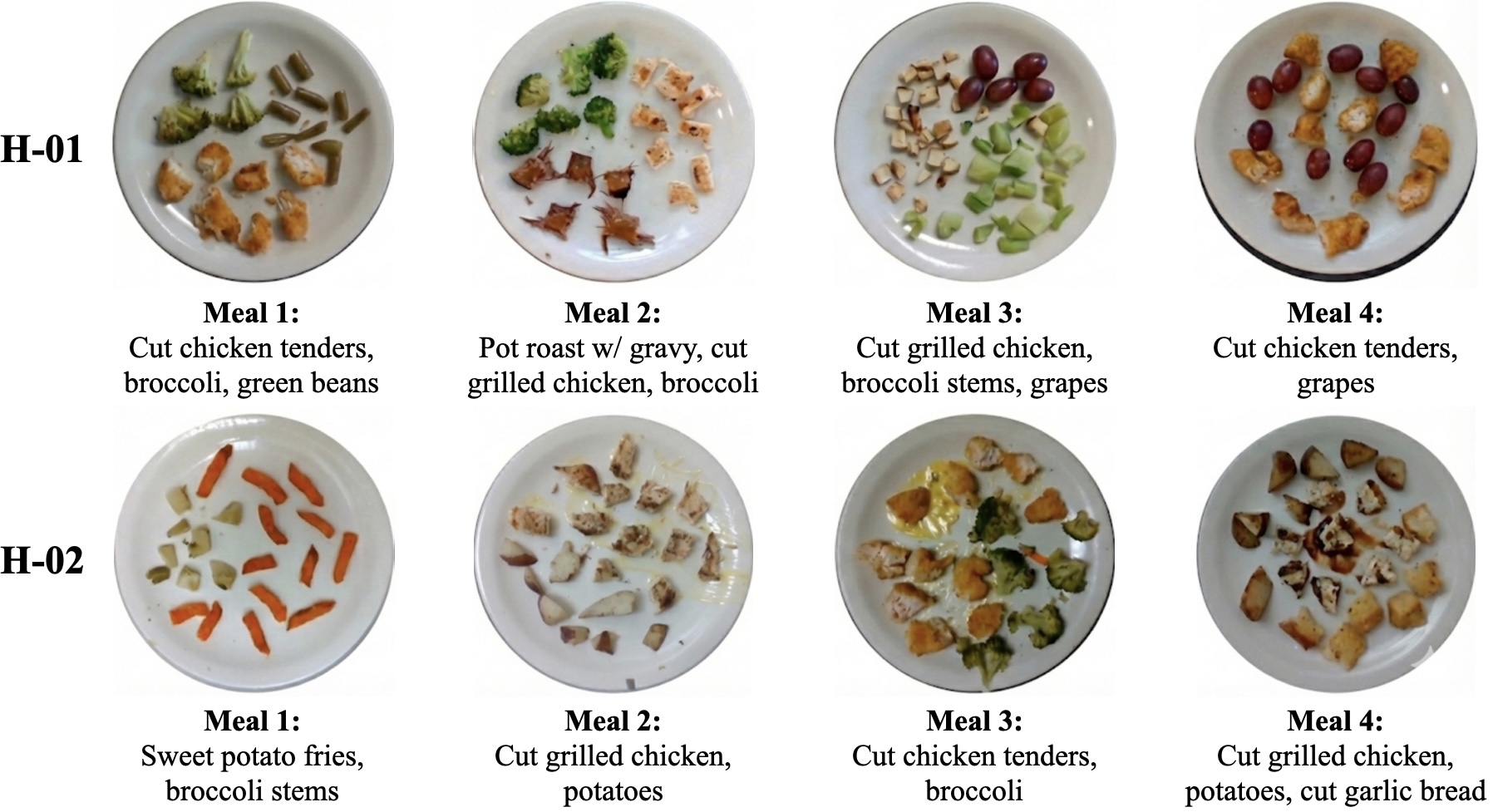
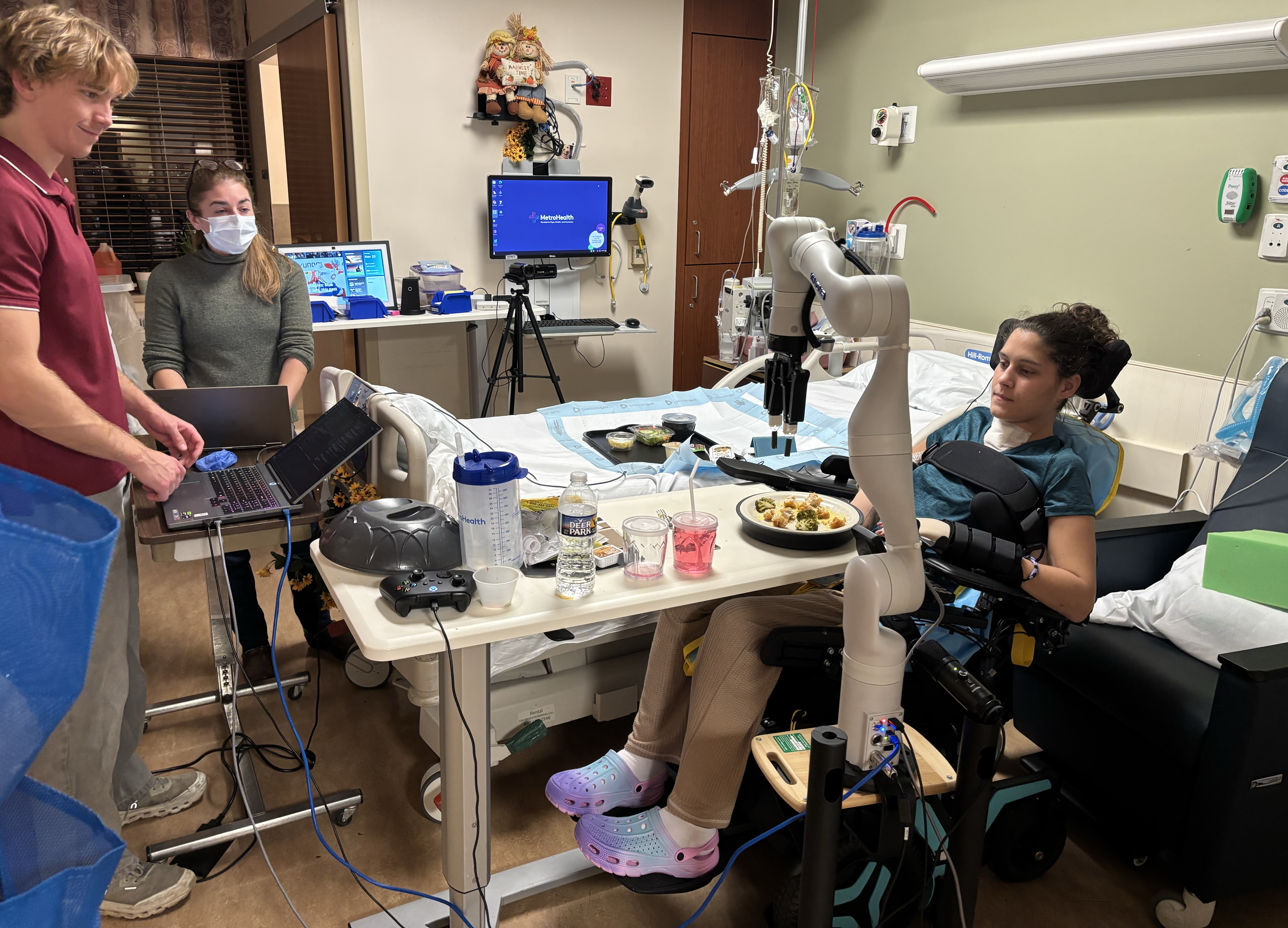
As physically assistive robots become more capable, it is necessary to evaluate them in real-world, changing environments where they may ultimately be adopted. We present the first deployment of a robot-assisted feeding system in a hospital inpatient setting, feeding modified hospital meals to two inpatients (H-01,H-02) on the spinal cord injury (SCI) floor.
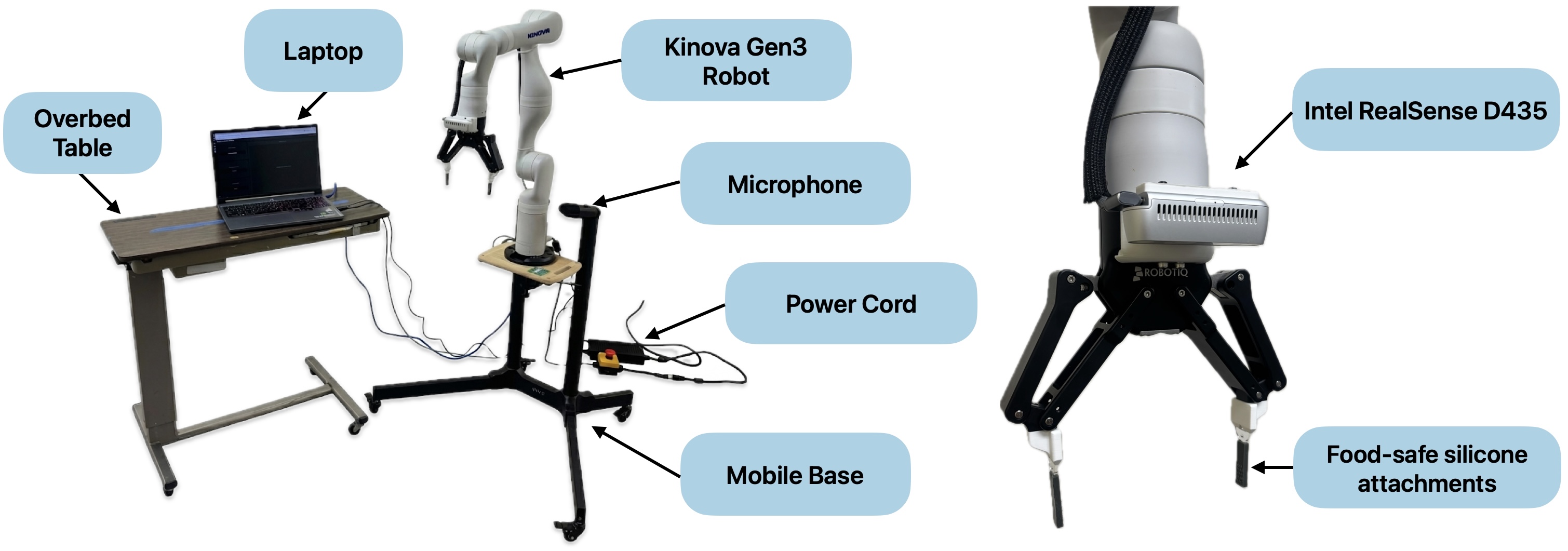
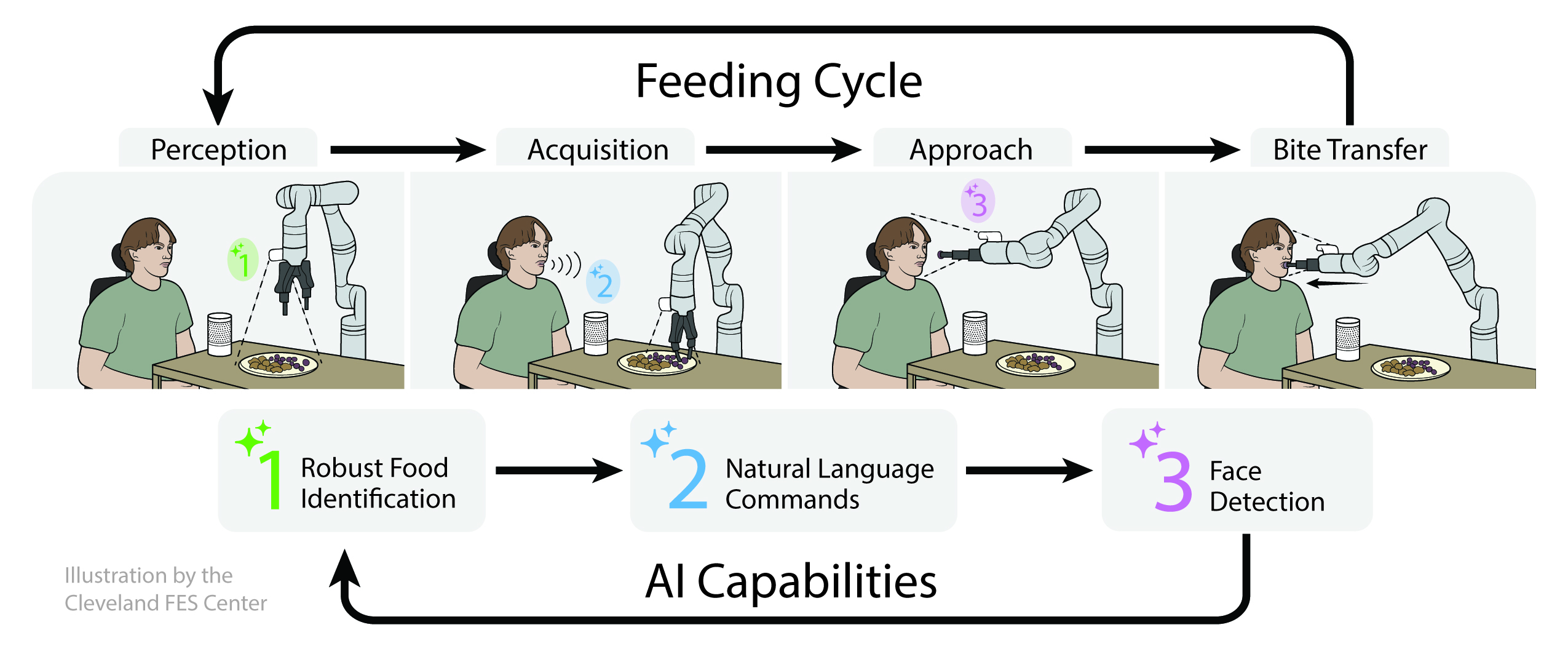
Our system, RAF-HI, relies on foundation models (GPT-4o, DINO-X) to identify and segment food items without explicit pre-training. The robot performs visual servoing to track the food and mouth in real-time, while custom-made food-safe gripper attachments support the acquisition of finger foods. Gemini Live API supports voice commands, allowing the user to select foods with natural language. RAF-HI was integrated fully into the hospital workflow, following existing scheduling, dining, and sanitation requirements.
Across eight meals (and 9 unique foods), RAF-HI had an food acquisition rate of 88.4% and a transfer rate of 87.4%, similar to state-of-the-art benchmarks. However, both users reported high workload and low usability, highlighting gaps between tehcnical performance and actual utility in a hospital setting. We argue that systems like RAF-HI should develop feeding assistance that is adaptive to the social, emotional, and environmental realities of hospital care.
System Design
Hardware Setup
System Flow
Results
| Participant | Meals | Interventions | Bite Acquisition Rate | Bite Transfer Rate | NASA-TLX (Benchmark: 37) | SUS (Benchmark: C) |
|---|---|---|---|---|---|---|
| H-01 | 4 | 20 | 70/76 92.1% |
61/70 87.1% |
43.3 | 52.5 |
| H-02 | 4 | 16 | 112/130 86.2% |
98/112 87.5% |
42.5 | 42.5 | Totals | 8 | 36 | 182/206 88.4% |
159/182 87.4% |
42.9 | 47.5 (F) |